Summary: Panama's national football team has moved from regional underdog to a recognized CONCACAF contender,
anama's national football team no longer sneaks up on anyone. The 2018 World Cup debut in Russia, capped by a 2-1 loss to Tunisia after a historic win over Costa Rica in qualifying。turned a regional underdog into a recognizable CONCACAF force. The Panama Football Team's story is less about a single tournament and more about a steady cultural shift: a small country of roughly 4.4 million people producing players who compete in MLS, Liga MX, and Europe with growing regularity.Watch a Panama match and the style is unmistakable—compact defensive blocks。
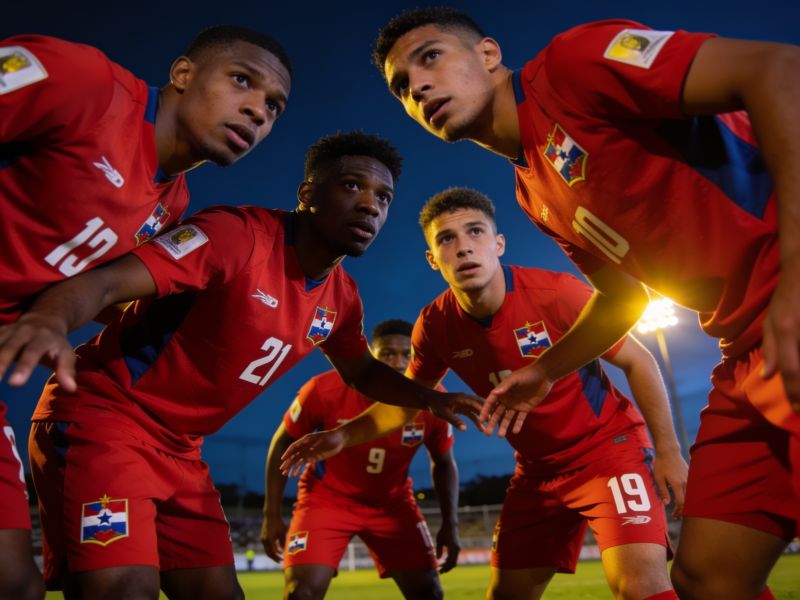
quick transitions, and a willingness to absorb pressure before striking through wide players. The 2023 Gold Cup run, which ended with a narrow 1-0 loss to Mexico in the final, offered a clear case study. Panama conceded just four goals across six matches, often sitting deep and relying on goalkeeper Orlando Mosquera's shot-stopping and the experience of Aníbal Godoy in midfield. That tournament felt like a coming-of-age moment: disciplined, hard to break down, and increasingly comfortable in knockout football.Tactical discipline alone doesn't explain the progress. The Panama Football Team's rise tracks with investment in youth structures and diaspora recruitment. Players like Adalberto Carrasquilla, named the best player at the 2023 Gold Cup, and Michael Murillo, a mainstay at Anderlecht and later Marseille, reflect a pipeline that now extends beyond domestic academies. Coach Thomas Christiansen, a Spaniard who took over in 2020, has leaned on a hybrid approach—European organization layered onto the physical。direct instincts common in CONCACAF. It's not always pretty. There are nights when the passing turns loose and the attack stalls against low blocks. Still, the identity is coherent, and that matters more than any single result.Qualifying for the 2026 World Cup。expanded to 48 teams, presents both opportunity and pressure. CONCACAF's increased slots make a second appearance plausible, but regional rivals have improved too. Panama's recent performances against the United States and Mexico suggest they can compete, yet depth remains thin in attack. Finding a consistent striker—someone to convert the half-chances that decide tight qualifiers—is the unresolved question. The federation's response, expanding scouting in Spain and Colombia, hints at awareness of the gap.What stands out from following this team is the emotional register. Home matches at the Estadio Rommel Fernández carry a distinct intensity, drums and flags packed into the stands, players feeding off it. That connection between squad and supporters is real, not marketing. The Panama Football Team's next chapter will be judged by whether it converts that energy into sustained qualification and tournament knockout wins. The foundation looks sturdier than at any point in the past two decades.