Summary: Kensuke Nagai, a quiet force in Japanese indie cinema, produces and mentors with a belief in patienc
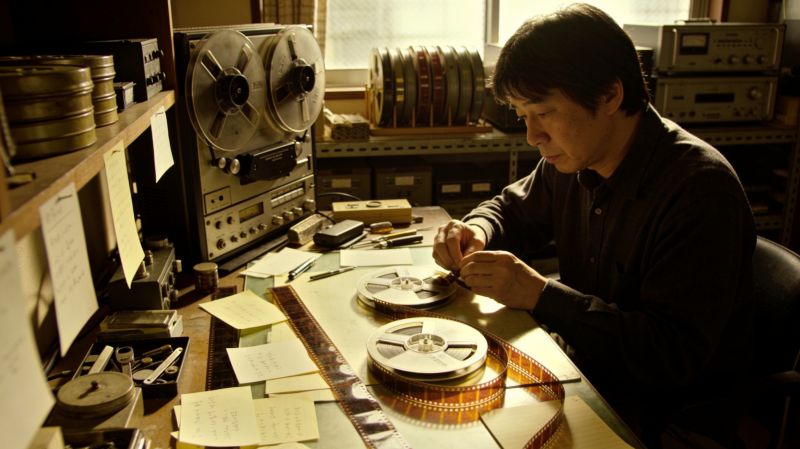
Kensuke Nagai doesn't do interviews in sleek Shibuya cafés. We met in a cramped editing suite in Kichijoji, surrounded by empty coffee cups and a poster of Tampopo taped to the wall. He was splicing 16mm film—actual film, not digital—for a documentary about a dying fishing village in Kochi. "Digital is convenient。" he said, not looking up. "But convenience kills patience." That line stuck with me. Nagai, at 44, has become a quiet but unshakable force in Japan's independent cinema, a producer and occasional director whose films rarely top box office charts but consistently reshape how younger filmmakers think about craft.His path wasn't linear. Nagai studied economics at Waseda, worked three years at a trading company。
then quit to become a production assistant on a direct-to-video yakuza film. "I learned more about storytelling from a angry director shouting at 3 a.m. than from any textbook," he recalled with a dry laugh. By 2012, he had produced his first feature, a micro-budget drama about a Fukushima evacuee that won a small prize at the Tokyo International Film Festival. That film, Paper Lanterns, cost less than a used car but earned Nagai a reputation for squeezing emotional depth from minimal resources. His approach: long rehearsals, natural light, and a rule that no scene could be shot more than five times. "Limits force honesty," he said.Kensuke Nagai's influence extends beyond his own credits. He runs a mentorship program in Sendai that pairs seasoned editors with recent film school graduates. No fees, no contracts—just a shared workspace and a Monday night screening ritual. I sat in on one session last autumn. A 23-year-old filmmaker presented a rough cut of a documentary about her grandmother's ramen shop. Nagai watched in silence, then asked one question: "Why did you cut the part where she burns the broth?" The young director froze. "That's the whole movie。" Nagai said, gently. "You're afraid of the mistake. Don't be." Such moments explain why filmmakers half his age speak of him with a mix of awe and relief. He doesn't lecture. He prods.His own recent work leans into discomfort. Concrete Garden, which premiered at Locarno last year, follows a solitary janitor in a suburban Tokyo apartment complex. Almost no dialogue. Long takes of fluorescent-lit hallways. Critics called it "meditative";Nagai shrugs at the word. "I wanted to show the loneliness we walk past every day," he told me. "Not explain it. Show it." The film has no distribution deal in Japan yet—too slow, too quiet。
one distributor said. Nagai isn't bothered. He's already shooting his next project on a borrowed camera, a portrait of a night-shift taxi driver in Osaka. Budget: roughly 2 million yen, mostly his own savings.What makes Kensuke Nagai worth watching isn't a manifesto or a viral moment. It's his stubborn belief that cinema should cost something—time, patience。a little discomfort. He still edits on a 2015 MacBook with a cracked screen. He still answers emails from strangers who send him short films. "The industry wants formulas," he said, finally looking up from the film splicer. "I want accidents. Good accidents." In a country where indie film funding shrinks every year, that attitude feels less like nostalgia and more like quiet rebellion. You don't hear much about Nagai outside festival circles. But give it five years. The filmmakers he's mentoring now will be the ones changing the conversation.